Why an Annual Electrical Walkthrough Is Worth Your Time
Electrical fires are the third leading cause of home fires in the United States. Most of them are preventable. The warning signs are almost always visible beforehand, but only if someone is looking for them.
Homes in Northwest Arkansas range from recently built new construction to homes built in the 1950s and 1960s with wiring that has never been touched. Regardless of your home’s age, a brief annual walkthrough of the electrical system is one of the simplest things you can do to protect your home and family.
This is not a replacement for a professional inspection. It is a homeowner-level review that helps you identify obvious issues and decide when to call a licensed electrician.
Panel Check
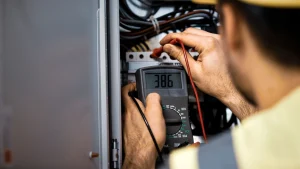
- Open the panel cover and look for any signs of scorching, rust, or water stains inside the enclosure.
- Check that all breaker slots are filled with breakers or blanks. Open slots allow access to live bus bars.
- Confirm the panel is properly labeled. Every breaker should identify what it serves. An unlabeled panel creates hazards during any repair or emergency.
- Check the panel brand. If it reads Federal Pacific, Stab-Lok, Zinsco, or Sylvania, schedule an evaluation with a licensed electrician.
- Look for any breakers in the tripped position that were not intentionally turned off.
- Note whether the panel feels warm to the touch or has any burning smell near it. Either warrants a call to an electrician.
Outlets and Switches
- Press the test and reset buttons on all GFCI outlets in bathrooms, kitchens, garages, and outdoor locations. If a GFCI does not trip on test or does not reset, replace it.
- Check all outlets for warmth. Touch each outlet cover plate briefly. Warm covers indicate a connection or load issue.
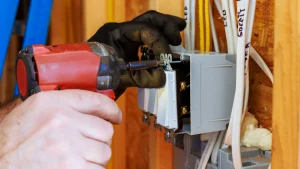
- Look for discoloration, scorch marks, or cracked covers on any outlet or switch. Replace any damaged devices.
- Check that outdoor outlets have in-use weatherproof covers and are GFCI protected.
- Test outlets in every room by plugging in a phone charger or small lamp. Note any that do not work.
Wiring Warning Signs
- Walk through the attic and basement or crawl space if accessible. Look for any exposed wiring with damaged or missing insulation.
- Check for any junction boxes without covers. All wire connections must be enclosed in a covered box.
- Look for cloth-covered or rubber-insulated wiring in older parts of the home. If present, have it evaluated.
- Note any areas where wires appear to be run through walls using extension cords as permanent wiring.
Smoke and CO Detectors
- Test every smoke detector in the home by pressing the test button. Every detector should sound.
- Test CO detectors using the test button.
- Check the manufacture date on the back of each detector. Detectors over 10 years old should be replaced regardless of whether they test correctly.
- Confirm you have smoke detectors in every bedroom, outside each sleeping area, and on every level of the home including the basement.
- Confirm you have CO detectors near sleeping areas if your home has gas appliances, an attached garage, or any combustion-based heating.
Extension Cord and Power Strip Habits
- Check for any extension cords running under rugs, through doorways, or stapled to walls. Remove and replace with permanent outlets if needed.
- Look for any extension cords used as permanent wiring, meaning they are always in the same place serving the same device. These locations need outlets.
- Check for daisy-chained power strips or extension cords connected to each other. Separate them.
- Inspect cords for cracked, frayed, or damaged insulation. Discard any damaged cord.
Outdoor Electrical
- Test all outdoor GFCI outlets using the test button.
- Check that all outdoor outlets have in-use weatherproof covers in good condition.
- Look for any exterior wiring that appears damaged, corroded, or improperly supported.
- Verify that any landscape lighting transformers are plugged into GFCI-protected outdoor outlets.
- Check the condition of any conduit running on exterior walls. Look for cracking, loosening, or separation.
When to Call an Electrician
Call a licensed electrician after your walkthrough if you find any of the following:
- GFCI outlets that do not test or reset correctly
- Warm outlet or switch covers
- Any burning smell anywhere in the home
- Scorching, discoloration, or damage at any outlet, switch, or the panel
- A Federal Pacific, Zinsco, or other flagged panel brand
- Exposed wiring or junction boxes without covers
- Smoke or CO detectors that fail the test button test
Found something during your walkthrough? Call NWA C&S Electric and we will assess it and give you a straight answer on what needs attention.
Frequently Asked Questions
How do I test a GFCI outlet?
Press the test button on the GFCI outlet. The power to the outlet, and any outlets protected downstream, should cut off. Press reset to restore power. If the outlet does not cut off when tested or does not restore power when reset, replace the GFCI outlet.
How do I know if my smoke detectors are too old?
Check the manufacture date printed on a label on the back or side of the detector. Smoke detectors should be replaced 10 years from the manufacture date. If you cannot find a date, the detector is likely old enough to replace.
What should I do if I find an outlet that does not work?
First check if it is protected by a GFCI outlet elsewhere on the circuit. Find all GFCI outlets in the home and press reset on any that have tripped. If the outlet still does not work after resetting all GFCIs, and the breaker is on, the outlet or wiring connection is faulty and needs a licensed electrician.
How often should I have a professional electrical inspection in addition to this annual checklist?
Every 10 years for most homes. More frequently for homes over 40 years old, homes with known wiring concerns, or before or after major renovation work. This annual homeowner checklist is a supplement to professional inspections, not a replacement.
Thirty Minutes a Year That Can Prevent an Electrical Fire
Most electrical fires give warning before they ignite. The homeowners who catch those warnings are the ones who periodically look. This checklist gives you a structured way to look at the right things.
NWA C&S Electric serves Springdale, Fayetteville, Rogers, Bentonville, Bella Vista, and the surrounding Northwest Arkansas area. If your annual walkthrough turns up something that needs attention, call us.
Call NWA C&S Electric: (479) 391-8655 | Schedule online at nwacselectric.com