Why NWA Homeowners Are Installing Whole House Generators
Power outages in Northwest Arkansas are not rare. Ice storms, severe thunderstorms, and high winds regularly knock out power across Benton and Washington counties, sometimes for several days. When that happens, a portable generator can keep a few lights on and the refrigerator running. But a whole house generator installation changes the situation entirely.
A standby generator detects an outage, starts automatically within seconds, and powers your entire home just like utility power does. HVAC, lights, appliances, medical equipment, and sump pumps all keep running. You do not have to do anything.
We have seen significant growth in generator installations across Springdale, Fayetteville, Rogers, and Bentonville over the past few years. Homeowners who lost power during a winter ice storm and spent three days without heat do not forget that experience.
How a Standby Generator Works
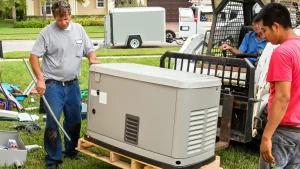
A standby generator sits outside your home on a concrete pad, similar to an HVAC condenser unit. It runs on natural gas or propane and connects directly to your home’s fuel supply. An automatic transfer switch connects the generator to your electrical panel.
When utility power goes out, the transfer switch detects the outage within a few seconds and signals the generator to start. The generator comes online, the transfer switch disconnects your home from the utility grid, and your home’s power is restored. The whole process typically takes 10 to 30 seconds.
When utility power returns, the process reverses automatically. The transfer switch reconnects the home to the grid, the generator shuts down, and it returns to standby mode. No manual intervention needed.
What Size Generator Does Your Home Need?
Generator size is measured in kilowatts. Getting the right size is critical. Too small and the generator cannot power your home properly. Too large and you have overpaid for capacity you will never use.
10 to 14 kW
Good for smaller homes under 1,500 square feet with a single HVAC system. Can power essential circuits including lights, refrigerator, outlets, and one air conditioning unit. Not typically enough for a full-sized two-story home in NWA.
16 to 20 kW
The most common size for residential installations in Northwest Arkansas. Handles a medium to large home with central HVAC, kitchen appliances, lights, and outlets running simultaneously. This range covers most single-family homes in the Springdale and Fayetteville area.
22 kW and Above
For larger homes, homes with electric vehicle chargers, multiple HVAC systems, or well pumps. A licensed electrician can perform a load calculation to determine the right size before you purchase the unit.
Natural Gas vs Propane: Which Fuel Type Is Right for You?
Most standby generators in NWA run on natural gas or propane. Each has advantages depending on your property.
Natural Gas
If your home already has natural gas service, this is often the most convenient option. The generator connects directly to your gas line. You never have to refuel it. As long as the gas supply is intact, the generator runs indefinitely. Most homes in Springdale, Fayetteville, Rogers, and Bentonville have access to natural gas.
Propane
For homes outside city limits or in rural parts of NWA that do not have natural gas service, propane is the right choice. You will need a propane tank sized appropriately for your generator’s runtime needs. Your propane supplier can help determine the right tank size based on your generator’s fuel consumption rate.
What Does Whole House Generator Installation Involve?
A whole house generator installation is not a DIY project. It involves multiple licensed trades, permits, and coordination between your electrician, plumber or gas fitter, and the utility. Here is what the process typically looks like.
Site Preparation
The generator needs a level concrete pad, positioned according to local code clearance requirements. In Arkansas, generators must be a minimum distance from windows, doors, and gas meters. Your electrician will advise on placement.
Electrical Work
A licensed electrician installs the automatic transfer switch, runs the wiring between the generator and your panel, and ensures everything meets NEC code requirements. This is the most critical part of the installation and must be done correctly to prevent backfeed, which is a serious hazard to utility workers.
Gas Connection
A licensed plumber or gas fitter connects the generator to your natural gas or propane supply. The line must be properly sized for the generator’s fuel demand.
Permits and Inspection
Generator installations in Arkansas require electrical and gas permits. Inspections are required before the system is energized. A licensed contractor handles all permit pulls and coordinates inspections.
How Much Does Whole House Generator Installation Cost in NWA?
Total installed cost for a whole house generator installation in Northwest Arkansas typically falls in these ranges:
- 10 to 14 kW generator installed: $4,000 to $6,500
- 16 to 20 kW generator installed: $6,000 to $9,000
- 22 kW and above installed: $8,500 to $12,000 or more
These prices include the generator unit, transfer switch, electrical work, concrete pad, gas connection, permits, and labor. Propane installations may cost slightly more if a new tank is needed. Prices vary based on site conditions, panel location, and the distance from the generator to the panel.
Want a specific number for your home? Call NWA C&S Electric and we will assess your home and give you an honest quote.
Frequently Asked Questions
How long does a whole house generator installation take?
Most installations are completed in one to two days. Site prep, electrical work, gas connection, and inspection can usually be coordinated within a week once the unit is on-site.
Does a standby generator require maintenance?
Yes. Standby generators run a self-test cycle weekly to stay ready. They also require an annual service that includes an oil change, spark plugs, air filter, and a full system check. Most manufacturers recommend service every 200 hours of use or once a year, whichever comes first.
Can a whole house generator power central air conditioning?
Yes, if the generator is properly sized. This is one of the main reasons homeowners in NWA choose a larger 16 to 22 kW unit. Running central air during an Arkansas summer outage is a priority most homeowners are not willing to give up.
Is a permit required for generator installation in Arkansas?
Yes. Electrical and gas permits are required. Any licensed electrician and plumber working on the installation will pull the appropriate permits as part of the job.
What is the difference between a standby generator and a portable generator?
A portable generator must be manually started, fueled with gasoline, and connected to individual appliances or a manual transfer switch. A standby generator starts automatically, runs on natural gas or propane, and powers your whole home. Standby units are permanent, weatherproof, and require zero action from the homeowner during an outage.
How long can a standby generator run during an outage?
On natural gas, a standby generator can run indefinitely as long as the gas supply is active. On propane, runtime depends on tank size and the generator’s load. A 500-gallon propane tank typically provides several days of full-home coverage depending on usage.
Do Not Wait Until the Next Ice Storm
The demand for whole house generator installation in NWA spikes every time a major storm hits. Lead times on generator units stretch out, and installation schedules fill up fast. The homeowners who are comfortable during the next outage are the ones who scheduled their installation before it happened.
NWA C&S Electric installs standby generators across Springdale, Fayetteville, Rogers, Bentonville, Bella Vista, and the surrounding area. We handle the electrical side of the installation and coordinate with your gas provider to get everything done correctly and to code.
Call NWA C&S Electric: (479) 391-8655 | Schedule online at nwacselectric.com