Why Breakers Are So Important
Your home’s electrical panel is like the heart of your electrical system. Inside, circuit breakers act as protectors, stopping electricity from flowing if a circuit becomes overloaded or unsafe. When a breaker fails, that protection is gone.
A working breaker trips when too much current flows through a circuit. But if it doesn’t trip when it should, or if it trips too often, it could mean the breaker itself is worn out or damaged. Understanding the warning signs can help you catch problems before they turn into something dangerous.
- Breaker Trips Repeatedly for No Clear Reason
One of the first signs of a bad breaker is one that keeps tripping, even when you’ve unplugged devices from the circuit.
Breakers trip to prevent overheating and electrical fires, but if the same breaker keeps tripping and there’s no overload or short circuit, the breaker itself could be failing internally.
This can happen due to:
- Old age or wear over time
- Corrosion or rust inside the panel
- Damage from past electrical surges
If you reset the breaker and it immediately trips again without a clear cause, it’s time to have it inspected.
- The Breaker Won’t Stay Reset
Sometimes, a bad breaker won’t reset at all. You may flip it to “off” and back to “on,” but it won’t click or hold its position.
This could indicate a mechanical problem inside the breaker, like a broken spring or latch. It might also mean there’s a short circuit or overload that has damaged the breaker permanently.
A breaker that won’t stay on should never be forced—it could spark or overheat. Always call a professional electrician to inspect it before trying again.
- Burning Smells or Scorch Marks
A burning smell, melted plastic, or scorch marks near your panel are serious red flags. These signs usually mean that heat has built up inside the breaker due to loose connections or internal arcing.
When a breaker overheats, it loses the ability to shut off power safely. Continuing to use it could lead to an electrical fire.
If you ever smell burning near your electrical panel, turn off the main power immediately and contact NWA C&S Electric for emergency service.
- Flickering or Dimming Lights
Flickering lights are often caused by loose wiring or overloaded circuits, but they can also point to a failing breaker. When a breaker’s connection weakens, it can cause inconsistent power delivery to lights and outlets.
If you notice lights flickering only in one area of the home or when certain appliances run, that circuit may have a faulty breaker.
Our electricians at NWA C&S Electric can test each circuit to find out whether the breaker or the wiring is to blame.
- Electrical Outlets Not Working
If certain outlets or appliances suddenly stop working but no breaker appears tripped, you may have a bad breaker that is failing internally.
In some cases, the breaker switch might look “on” even when it isn’t supplying power. This can trick homeowners into thinking the issue is with the outlet or wiring.
A simple circuit test by a professional can reveal whether the breaker is functioning correctly.
- The Breaker Feels Hot to the Touch
A healthy breaker should never feel warm or hot. Heat means it’s struggling to carry current safely, likely due to internal wear or corrosion.
Touching a hot breaker is dangerous, it could shock you or worsen the damage. If you notice heat around your panel, call an electrician right away.
- Buzzing or Crackling Noises
Your breaker panel should be nearly silent. If you hear buzzing, popping, or crackling, that’s a sign of electrical arcing.
Arcing occurs when electricity jumps between connections, creating small sparks. This can melt metal parts and damage insulation, eventually leading to a fire.
If you hear unusual sounds coming from your panel, don’t ignore them. These noises are a warning that something is seriously wrong.
Why Breakers Go Bad
Circuit breakers wear out like any mechanical part. Over time, heat, humidity, and electrical load cycles take a toll. Common causes of breaker failure include:
- Overuse: Constant tripping weakens internal components.
- Corrosion: Moisture or humidity inside the panel damages connections.
- Age: Most breakers last 30–40 years, but older ones lose sensitivity.
- Power surges: Lightning strikes or utility issues can burn internal contacts.
- Improper installation: Incorrect torque or wiring can loosen over time.
Replacing a single breaker is affordable and far safer than risking damage to your entire electrical system.
Testing a Suspect Breaker
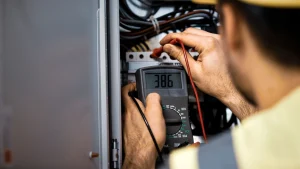
Testing a circuit breaker requires proper equipment and training. Electricians use a multimeter to check voltage and continuity, confirming whether the breaker is delivering power correctly.
While DIY videos might make this look easy, testing live electrical panels can be dangerous. One wrong move can cause shock or arc flash injuries. It’s always best to let a licensed professional handle it.
When to Replace Your Breaker
You should have your electrical panel inspected every few years, especially if you notice flickering lights, tripping circuits, or a burning smell.
If a breaker shows any of these signs:
- Trips often without a cause
- Won’t reset
- Feels hot
- Shows scorch marks
- Smells burnt
It’s time to replace it. NWA C&S Electric can replace damaged breakers and inspect your panel for any wiring issues that might have caused the problem in the first place.
The Importance of Professional Repair
Working with electricity isn’t something to take lightly. A faulty breaker can cause hidden damage that puts your entire system at risk.
At NWA C&S Electric, our licensed electricians specialize in diagnosing and replacing bad breakers safely. We use high-quality replacement parts and ensure every connection meets current electrical codes.
Whether you live in Springdale, Fayetteville, Rogers, or Bentonville, our team can inspect, repair, and upgrade your electrical panel to keep your home safe and efficient.
Conclusion
A bad breaker is more than just an inconvenience—it’s a serious safety hazard. Signs like flickering lights, burning smells, and tripped circuits are your home’s way of warning you something is wrong.
Don’t wait for a small problem to become a dangerous one. If you suspect a faulty breaker, contact NWA C&S Electric today. Our expert electricians provide safe, reliable repairs and peace of mind for homeowners throughout Northwest Arkansas.
Your home deserves safe, steady power. Let us help you keep it that way.